You Are the Product: Personal Branding for Solopreneurs Who Build for Life
· David
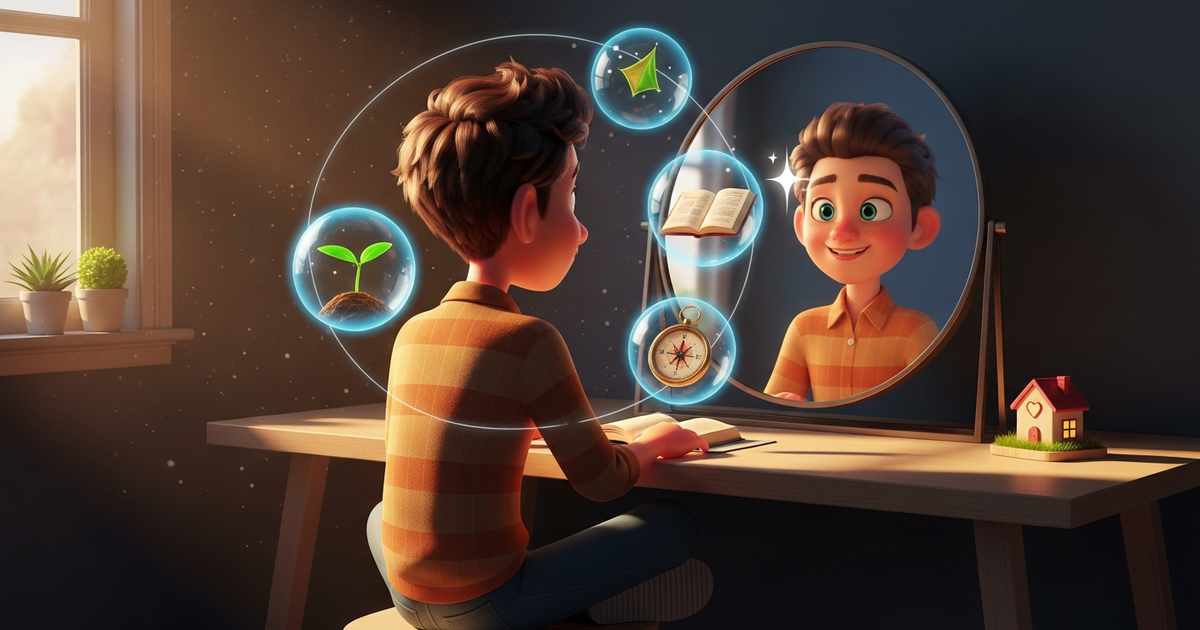
Nobody warned me that the hardest part of building a solo business wouldn't be the product. It would be figuring out what to say about myself.
I spent months obsessing over the right tagline. The right niche. The right LinkedIn headline. I rewrote my "about" page four times in a single year. I watched other founders confidently tell the world who they were and what they did, while I sat with a blank cursor wondering why it felt so complicated.
Then I realised I was solving the wrong problem.
I wasn't struggling with personal branding. I was struggling with identity. And until I got honest about who I actually was and what I was actually building, no amount of copywriting would fix it.
Your Brand Is Already There
Here's what most solopreneurs get backwards: they think personal branding is something you create. A logo, a colour palette, a carefully crafted bio. Something you design and launch, like a product.
But if you're building a life-first business, you're already a brand. Every decision you make, every thing you choose to say yes or no to, every value that shapes how you work, how you charge, how you treat your clients — that's your brand. You're not creating it. You're revealing it.
The problem isn't that you don't have a personal brand. The problem is that most solopreneurs haven't taken the time to articulate what's already there.
What Personal Branding Actually Means
Strip away the social media noise and the "build your audience" advice, and personal branding for a solopreneur comes down to one question: why would someone choose you over someone else with similar skills?
The answer is rarely the skills themselves. Skills are table stakes. What makes someone choose you is the story behind the skills, the perspective you bring, and the trust they feel before they ever speak to you.
That trust is built through consistency. Not through posting every day. Through showing up the same way, with the same values, across every touchpoint: your website, your content, your proposals, your emails, even how you set boundaries with clients.
A strong personal brand doesn't shout. It resonates. Over time. Quietly.
The Life-First Dimension
Here's where it gets interesting for solopreneurs who build around their life rather than the other way around.
Most personal branding advice is written for people trying to maximise growth, revenue, reach. Scale your audience. Dominate your niche. Build a machine.
But if your goal is a sustainable, life-centred business, your brand needs to reflect that. Not just your expertise. Your values. Your pace. Your actual priorities.
This matters for a practical reason: the clients, customers, and collaborators you attract will mirror the brand you put out. If your brand signals hustle, urgency, and constant availability, that's who will find you. If your brand signals thoughtfulness, clarity, and intentional work, a different kind of person will show up.
Your personal brand is a filter. Build it like one.
Practical Starting Points
You don't need a brand strategist or a six-week course to start. Here is where I'd actually begin:
- Write down three things you believe about work that most people in your industry wouldn't say publicly. These are the seeds of a genuine brand perspective. If your beliefs are identical to everyone else's, your brand will be too.
- Look at the last five decisions you made in your business — what to work on, who to say yes to, what to turn down. What values show up consistently? That's your brand's operating system, whether you've named it or not.
- Ask one or two past clients what they'd tell a friend about working with you. Not what you did, but how it felt. The language they use will often be more precise and more human than anything you'd write about yourself.
- Decide on your pace. Personal branding doesn't require being everywhere all the time. Decide where you'll show up and commit to that one place before adding more. One good LinkedIn post a week, written from genuine experience, builds more trust than daily mediocre content.
When I started working on the Modulyo content strategy, this last point was the one I kept coming back to. It's easy to think you need to be on every platform at once. But showing up consistently in one place, with something real to say, is both more sustainable and more effective. The platform doesn't matter nearly as much as the clarity.
Authenticity Isn't a Buzzword Here
I know "be authentic" sounds like advice you'd find on a motivational poster. But for solopreneurs, it's structural.
When you're building alone, your brand and your business are inseparable. You can't sustain a personal brand that doesn't match who you actually are, because the performance is exhausting over time. And exhaustion is the enemy of a life-first business.
Build a brand you can maintain without burning out. One that feels like an honest expression of how you actually work, not a polished version of the founder you think you should be.
The good news is that this kind of brand compounds. Every piece of content, every project, every conversation becomes evidence of who you are. Over months and years, the picture gets clearer and more magnetic, without you having to shout louder.
The Long Game
Personal branding for solopreneurs isn't a launch. It's a practice.
You don't need to have it all figured out before you start. Some of the strongest personal brands are built by people who were visibly working things out, sharing real uncertainty alongside real insight.
That combination of honesty and expertise is rare. And rare things attract the right people.
If you're building a life-first business, your brand should tell that story. Not the highlight reel. The actual story of someone who decided what they wanted their life to look like, and then built a business that served that vision.
That's a story worth telling. And worth building.